SMS Verification Costs: How to Save 50% Without the Headache
SMS Verification Costs: How to Save 50% Without the Headache
If you run a cross-border e-commerce business, you've probably noticed something frustrating over the past couple of years: platform registration checks have gotten noticeably more aggressive. US and European sites in particular now seem to demand phone verification at every turn, and the cost of buying numbers has quietly crept upward—from pennies to dollars per number—without any clear reason. The truth is, if you're still paying premium rates for SMS verification in 2026, the problem isn't the market. It's that nobody's taken a hard look at what that spend is actually buying.
So let's talk about that. I'm not here to push you toward a specific provider. I want to pull back the curtain on how this industry really works. Once you see the mechanics, you'll understand exactly why the same verification needs can be met at half the cost.
First, the Math: How Much Are You Burning on SMS Verification Every Year?
I've worked with quite a few teams that manage accounts in bulk, and the most extreme case I've seen was a group burning several thousand dollars a month on verification codes alone. When I asked which provider they used, the answer was "the one we've always used." When I asked why, it was "a friend recommended it." That's about as deep as the decision-making goes for a lot of teams.
Here's the thing—the SMS verification market has changed dramatically in recent years. Back in the day, whoever had the most number segments won. That's no longer how it works:
- Old number segments get recycled at a high rate, so the failure rate spikes the moment a platform upgrades its risk controls.
- Many smaller platforms resell secondhand resources from other brokers, which makes them notoriously unstable—connections drop without warning.
A pattern we see all the time across the industry: on those "premium" services, a third of the numbers you pay for never actually receive the code. So the premium you're paying isn't for better service—it's for the comfort of a brand name after multiple middlemen take their cut.
Why Premium SMS Verification Services Charge More Without Delivering More
Industry observers have noted a major shift since the second half of 2025: the major platforms changed how they verify new accounts. It used to be that any number capable of receiving a text was good enough. Now platforms check a number's "cleanliness"—has it been used by many people? Does it belong to a virtual number range? Does it have a history of abnormal behavior?
Many traditional SMS verification providers haven't updated their number pools to keep up. They're still pushing inventory from three or four years ago. You pay top dollar and get numbers that platforms have already flagged, which sends registration success rates plummeting. Let me put it plainly: paying a lot isn't the problem. Paying a lot for unusable numbers is.
So what's the smarter approach? It comes down to one principle: stop buying numbers and start buying success rates.
The Smarter Playbook: How to Reduce SMS Verification Costs for Cross-Border E-Commerce
Most teams evaluate providers by the price per SMS, and that's a classic mistake. What actually drives your bottom line is the effective cost per working number.
Here's a quick example. Provider A charges $0.30 per number, but 30% of those numbers never receive a code. Provider B charges $0.20 per number and has a success rate above 95%. Do the math: Provider A's effective cost is closer to $0.43 per working number—more than double what you'd pay with Provider B.
So when you're evaluating a provider, focus on these three metrics:
- Is the number pool refreshed regularly? Outdated segments are worthless no matter how many there are.
- Does the provider offer automatic retries or refunds for failed verifications? This determines who eats the cost when something goes wrong.
- Do they support pay-per-success pricing? It's the healthiest model in the industry right now.
From my experience, platforms like Getfollow have built a solid reputation by following this exact playbook—prioritizing number quality, publishing transparent pricing, and skipping the fluff. They may not have the lowest sticker price out there, but their effective cost is usually the lowest you'll find.
That said, don't just take my word for it. Compare several providers and judge them on real success-rate data rather than sales pitches. And always run a small test before committing—buy a few dozen numbers, check the quality and delivery speed, then decide whether to scale up. These days, trust is something you verify, not something you assume.
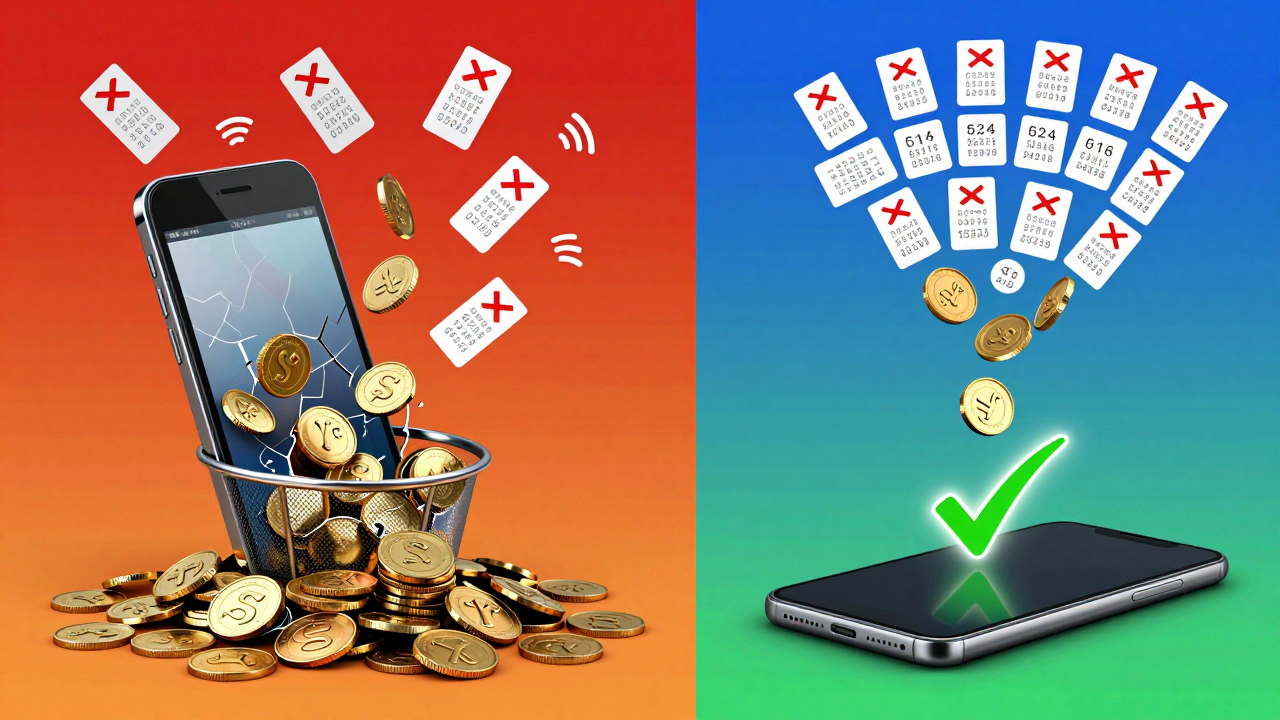
The Bargain Trap: Risks of Cheap SMS Verification Platforms
Since we're talking about costs, let's address the other end of the spectrum—the people who chase providers charging fractions of a cent per number.
These providers are usually individuals or tiny operations. Where do their numbers come from? Either wholesale purchases from gray-market sources or stockpiles of manually registered numbers from deal-hunting communities. The risks are pretty straightforward:
Account association is the big one. When a single number segment is shared across thousands of users, platform risk controls eventually sweep it up—and every account tied to those numbers goes down with it. And when that happens, good luck getting support. These providers have a habit of disappearing when things go sideways. You're on your own.
So don't hear "cut costs by half" and sprint toward the cheapest option on the market. The goal is smart savings, not self-sabotage.
Practical Ways to Cut SMS Verification Costs: Tips for Small Teams and SMBs
If your operation doesn't need thousands of verifications daily, the traditional per-number billing model is probably wasting your money. Look for tiered volume packages or pay-per-success billing instead. Many cross-border sellers report that simply switching to a success-based model cut their monthly spend by around 50%—a dramatic difference.
Here's another detail that's easy to overlook: pricing varies wildly across overseas number segments. A UK number could cost several times more than a US number, yet plenty of verification scenarios don't care which country the number comes from. If you're operating on European or American platforms, you can often use numbers from smaller European countries—they're cheaper and generally much cleaner.
This is already standard practice among smart teams: match the number segment to your actual needs first, then compare prices. That order matters more than most people realize.
FAQ: Common Questions About SMS Verification Services
How do I know if I'm overpaying for SMS verification?
Calculate your effective cost per successful verification instead of looking at the sticker price per number. If more than 10–15% of the numbers you buy never receive a code, you're overpaying—even if the per-number price looks reasonable.
What's the difference between cheap and premium SMS verification platforms?
The price alone tells you very little. The real difference is in number pool quality: how fresh the segments are, whether they've already been flagged by platforms, and whether the provider stands behind failures with refunds or automatic retries.
Can I really cut my SMS verification costs in half?
Yes—but the savings come from smarter purchasing, not just lower prices. Most teams see savings of around 50% by switching to pay-per-success models, choosing appropriate number segments, and testing with small batches before going all in.
Is it safe to use cheap SMS verification services?
Often not. The risky ones are typically run by individuals or small operations sourcing numbers from gray markets. Those numbers get recycled across thousands of users, which triggers platform risk controls and can get your accounts linked to each other. Always verify a provider's success-rate data and test with a small batch first.
The Bottom Line: Start Cutting Your SMS Verification Costs Today
Let's come back to where we started. In 2026, you shouldn't be paying premium prices for SMS verification. Cutting your SMS verification costs in half comes down to three things: evaluate providers by effective success rates rather than sticker prices, always test with a small batch before committing, and pay attention to how often a provider refreshes its number pools.
SMS verification might be a small line item in your cross-border operation, but it's eating your budget every single day. If you haven't reviewed your current cost structure recently, take ten minutes to do it now—the results might surprise you. Don't wait until that line item balloons. Start today, and next month you could be spending half as much.