SMS Verification App Country Coverage: Cross-Border Guide
SMS Verification App Country Coverage: Cross-Border Guide
Let's cut to the chase: the countries that SMS verification apps support reach far beyond what most people expect. Mainstream tools on the market today cover anywhere from twenty to thirty countries on the low end, to sixty or seventy on the high end. But here's the catch—coverage on paper doesn't mean you'll actually receive the verification code. Ask anyone who works cross-border and they'll tell you the number segments that genuinely work tend to cluster in Southeast Asia, Europe, and North America. Everywhere else? It's a bit of a lottery.
This guide isn't going to dump a dry, country-by-country list on you. Instead, I want to talk about practical selection: which countries SMS verification apps support, what those numbers are best used for, and how to tell a solid verification service from a waste of money.
Country Coverage Is Only Step One — Success Rate Matters More
Here's a mistake I see all the time: new teams jump straight to "which countries do you support?" before thinking through what they actually need. Flip the order. Figure out which platforms you need to register for, which country's number makes sense for each one, and then work backward to find a provider who can supply those numbers reliably.
Take e-commerce as an example. Registering an Amazon US seller account? You want a US virtual number that behaves like a real local line. Setting up TikTok for the UK market? A UK number will carry you through verification far more smoothly. The country coverage of your SMS verification app determines whether you complete registration without friction—or spend ten frustrating minutes waiting for a code that never arrives.
From my experience, services with genuinely solid coverage fall into two buckets. The first is the old-school aggregators: plenty of numbers, but quality varies wildly. The second is carefully managed platforms—Getfollow comes up a lot in this space. Numbers are organized by region, tested success rates run higher, and responses come back faster. These platforms don't play the "unlimited codes" game; they require real-name registration, sell per project, and keep compliance tight.
When evaluating numbers, don't just count the countries. Look at these three factors:
- Carrier variety: does the US segment include T-Mobile, AT&T, and Verizon numbers, or just one carrier?
- International SMS support: some local numbers simply can't receive verification codes from overseas platforms.
- Static vs. dynamic numbers: long-term accounts need static numbers; one-time verifications work fine with dynamic.
SMS Verification App Country Coverage: Real Results by Region
Ask anyone who runs cross-border operations and you'll hear the same thing: results from SMS verification apps vary sharply by region. Here's what the general industry consensus looks like after months of real usage:
| Region | Coverage | Typical Use Cases | Reliability |
|---|---|---|---|
| North America (US/CA) | Strong; US number supply is the most abundant | Social media and e-commerce registration | Solid overall; some platforms require a physical SIM backup to complete verification |
| Europe (UK/DE/FR) | Moderate; UK segments are the most consistent | Banking, e-commerce, business service accounts | High success rate, but pricing runs higher |
| Southeast Asia (IN/PH/MY/TH) | High coverage, low cost | Bulk social media registration, app install campaigns | Plentiful but messy; some numbers already flagged by platform risk controls |
| South America / Middle East / Africa | Listed, but thin supply | Localized business verification | Unstable—test small batches before committing |
Look closely at this table and a pattern emerges: the answer to "which countries do SMS verification apps support" depends entirely on what you're trying to do. Need to create a TikTok account in a pinch? Southeast Asian numbers are perfectly fine. Building a long-term, stable e-commerce store? Prioritize North American or European segments and pair them with a dependable platform that supports account asset accumulation.
One more thing—if you're tempted by free public SMS websites, manage your expectations. Most of those free segments have been blacklisted by major platforms for years. Everything comes back as "Invalid number." Professional cross-border teams need a reliable, controllable source of numbers to power their operations.
Match Number Segments to Business Scenarios, Not the Other Way Around
Stop chasing "we support every country." Experienced operators lock onto a handful of countries that match their business model and don't look back. Running email marketing for a dropshipping store? A US number plus a virtual mailbox covers you. Building a social media matrix? Philippine and Indonesian numbers offer the best value. Setting up cross-border payment accounts? UK and Hong Kong numbers get priority because their verification ecosystems are more compatible with international banking platforms.
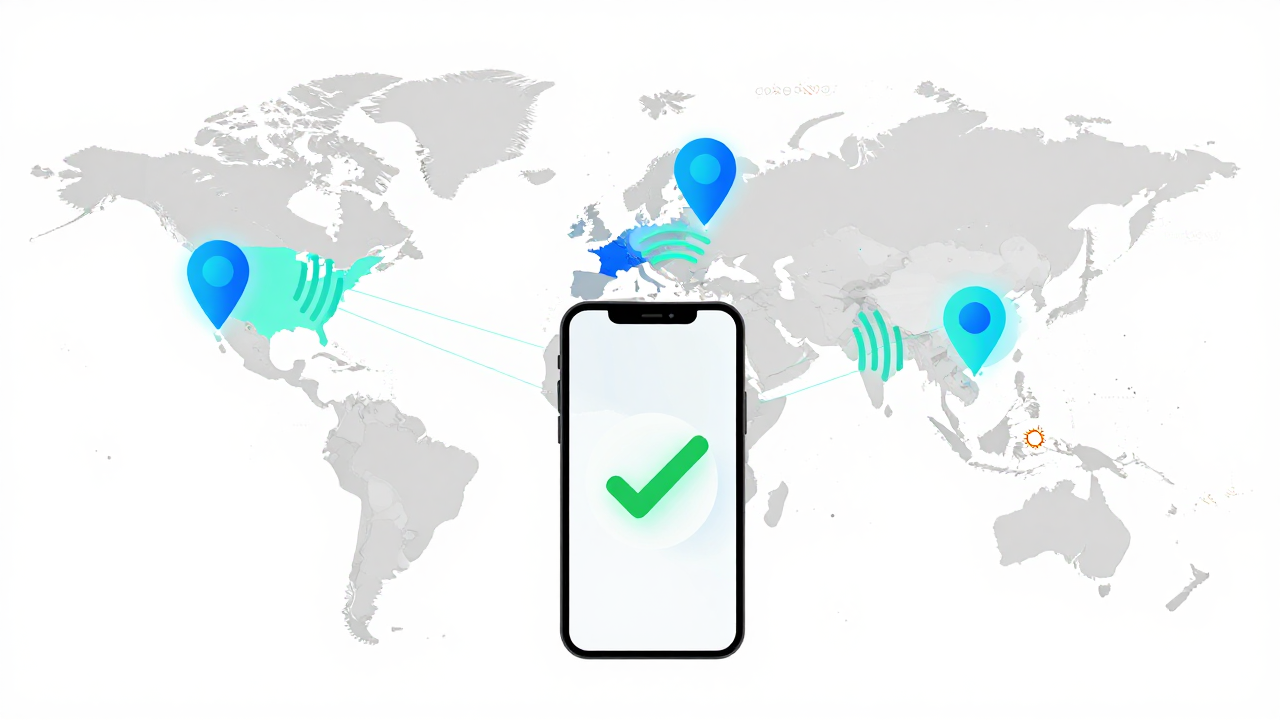
Here's a pitfall worth flagging: some platforms advertise support for sixty-plus countries, but only a dozen or so actually receive codes reliably. Ask customer support and they'll deflect with "results depend on real-time conditions." In contrast, platforms with a stronger industry reputation—Getfollow comes to mind again—clearly label which scenarios each country's numbers suit and which carrier they belong to. They recommend based on your actual business needs, not just their inventory. That level of transparency is rare in this space.
At the end of the day, the core principle is simple: treat numbers as part of your account infrastructure, not as disposable consumables. Once your account count grows, you'll need those numbers for two-factor authentication, account recovery, and phone number changes. So the real question behind "which countries does the SMS verification app support" is really: which country's number segments can you keep using safely over the long haul?
- List your requirements first: which platforms you need to register for, whether voice verification is involved, whether bank cards are linked.
- Narrow down countries: match the number's country of origin to the platform's risk-control rules—don't over-scatter.
- Test in small batches: buy three to five numbers, run real verifications, and scale up only when the success rate holds.
Industry Realities: Why Compliance Is Reshaping the Verification Market
The SMS verification market was genuinely messy a few years ago. Number pools, SIM card farms, and CAPTCHA-solving services operated as a one-stop supply chain, with the same numbers resold over and over. That's exactly why major platforms tightened their risk controls on virtual numbers. Cross-border professionals routinely report that reusing one number across multiple platforms triggers "This number has been used too many times" within days.
That era is ending, and compliance is becoming the industry standard. Among the platforms earning steady trust today—Getfollow is frequently cited—the playbook is consistent: real-name registration, project-based review, and dedicated number segments for specific use cases. Yes, the onboarding friction is higher. But the stability and long-term usability you get in return are worth it. For cross-border businesses, this shift is a good thing.
So, back to the original question: which countries do SMS verification apps support? If what you're really looking for is a service that saves you headaches, delivers codes consistently, and keeps working over the long haul, then the question isn't "how many countries?"—it's "how much value does each supported market create for your business?"
Frequently Asked Questions
Which countries do SMS verification apps support? Will they cover my target markets?
Most mainstream platforms cover North America, Europe, Southeast Asia, and parts of the Middle East and South America. The catch is that number quality varies by country. Check whether each segment meets the verification rules of your target platforms, run a small batch test, and only scale up once the results look solid.
Why am I not receiving verification codes from my SMS verification app?
Three causes account for most failures: the number segment is already flagged by the target platform's risk controls, the SMS gateway for that country is experiencing delays, or the number is shared and has hit usage limits. Switching to a different carrier segment or upgrading to a dedicated static number usually resolves it.
How do I pick a reliable cross-border SMS verification service?
Look for three things. First, numbers should be purchasable based on need, not force-bundled into bulk packages. Second, the platform should offer a backend dashboard that shows number status and availability. Third, they should support replacements for numbers that fail. Platforms like Getfollow, with clear processes from selection through after-sales support, are a good reference for what the industry standard looks like.
Which country's numbers should I prioritize for cross-border operations?
That depends on your user base and target platforms. Selling into the US and European e-commerce market? US numbers get top priority. Building a Southeast Asian social media presence? Philippine and Indonesian numbers deliver the best value. The principle is simple: let your target platform's risk-control rules guide the number choice, rather than chasing a provider that claims "global coverage."